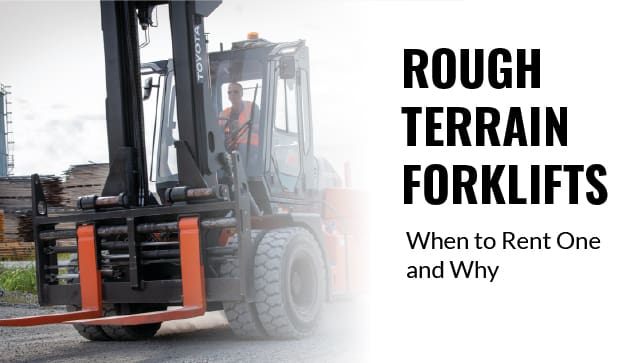
Rough terrain forklift rentals are a smart solution for handling tough outdoor environments where standard forklifts fall short.
These specialized industrial forklifts are equipped with durable tires, four-wheel drive, and high ground clearance to tackle challenging outdoor environments like uneven surfaces, mud, and gravel with ease. Choosing the right rough terrain forklift rental ensures you have the power, stability, and versatility needed to move heavy loads safely and efficiently across rough terrain.
In this comprehensive guide, we’ll explore the different types of rough terrain forklifts, key factors to consider when renting, common use cases, and tips for maximizing rental efficiency. Whether you’re working on a construction site, farm, event, or landscaping project, understanding your rough terrain forklift rental options will help you select the right equipment for your job and keep your operations running smoothly.
Let’s dive in!
Types of Rough-Terrain Forklifts
There are several types of forklifts built for rough terrain, each suited to different tasks. Understanding the options will help you choose the best rental for your job’s needs. The main categories include:
High-Capacity Rough Terrain Forklifts
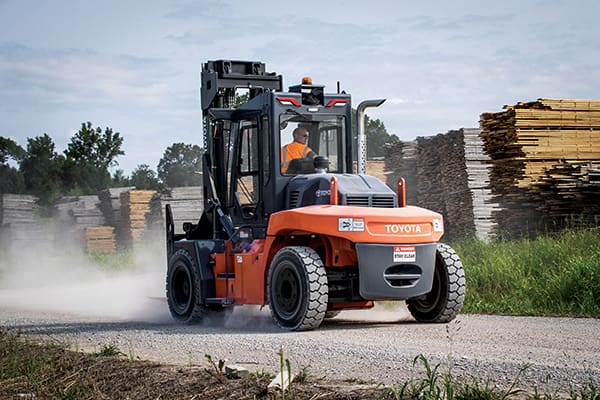
High-capacity rough terrain forklifts are powerful machines designed to handle exceptionally heavy loads. Typically used in demanding industrial environments, these forklifts can lift weights ranging from 10,000 to 30,000 pounds or more. With reinforced frames, robust engines, and oversized pneumatic tires, these units easily navigate rugged terrains like construction sites or outdoor industrial yards. Rent a high-capacity forklift when your project involves heavy-duty lifting such as steel beams, large concrete blocks, or heavy machinery.
Telescopic Boom Forklifts (Telehandler)
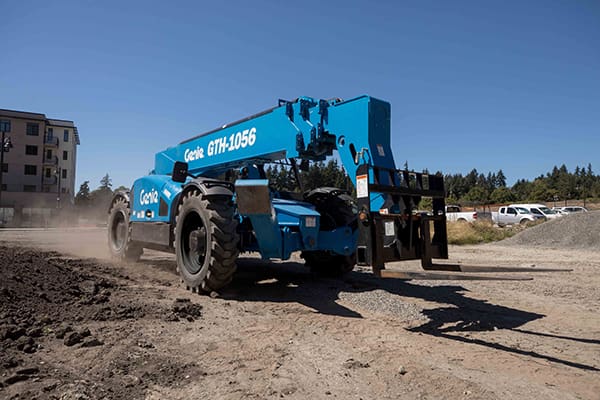
Telescopic boom forklifts, often called telehandlers, feature extendable booms capable of reaching both vertically and horizontally. This versatility allows operators to maneuver loads around obstacles and position materials precisely at elevated heights. Telescopic boom forklifts are indispensable for construction projects, roofing tasks, and agricultural operations, where materials frequently need placement at significant heights or across uneven ground. These forklifts combine the advantages of a crane and a forklift, making them an excellent rental choice for multifaceted projects.
Portable Rough Terrain Forklifts
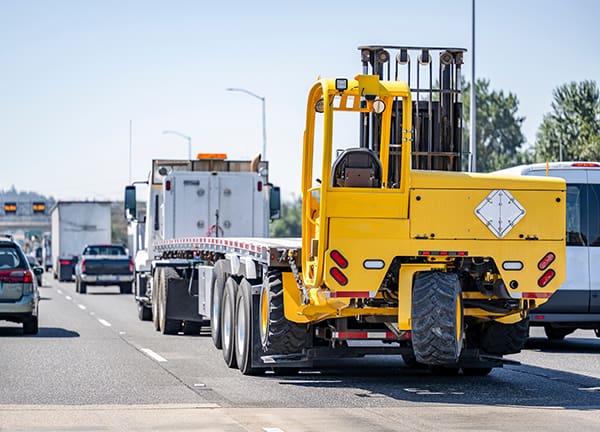
Portable, self-propelled rough terrain forklifts offer maximum maneuverability in confined outdoor spaces. Compact in size yet ruggedly built, these forklifts are ideal for jobs where larger equipment cannot operate efficiently. Their portability allows them to be easily transported to different sites, making them perfect for landscaping projects, outdoor events, or smaller-scale construction tasks. Renting a portable, self-propelled forklift is beneficial when flexibility, ease of transport, and the capability to handle rough terrains are essential to your project.
Key Considerations for Renting
When planning a rough terrain forklift rental, it’s important to match the right equipment to your needs and be aware of the practical details. Consider these key factors before you rent:
Rental Costs
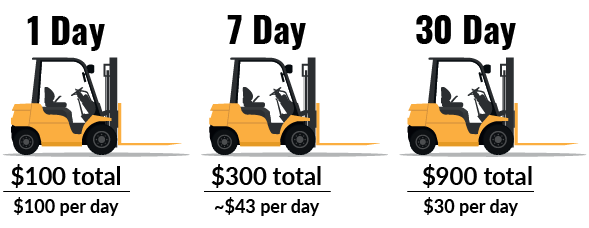
Budget is a critical factor. Rough terrain forklifts are heavy-duty machines, and rental rates will reflect that. Get quotes for daily, weekly, or monthly rates and determine what duration makes financial sense for your project. Also ask about delivery fees (these forklifts often require special transport due to their size) and whether fuel is included.
It is important to remember that while the rental cost may seem significant, it’s far lower than purchasing a similar machine outright. You avoid the large capital expense and ongoing costs like insurance and storage.
Plan your rental duration carefully to optimize cost. For example, if you need the machine intermittently over a month, a monthly rate could be cheaper than multiple short-term rentals.
Matching Equipment to Terrain and Job
Not all rough terrain forklifts are the same, so choose a model that fits both your environment and the tasks at hand. Start by assessing the terrain: is it muddy, sandy, hilly, or confined?

- For muddy or uneven ground, choose a 4×4 rough-terrain forklift with high ground clearance for better traction.
- If the work area is tight or has height restrictions, a smaller rough terrain forklift (often a compact model) might be more suitable than a large telehandler. Consider what you need to lift and where: If you must lift materials to a second story or over an obstacle, an extended-reach telehandler may be the solution.
- For simply moving pallets around a job site at ground level, a standard all-terrain forklift could be more efficient. Always match the machine’s capacity and features to your specific job – this ensures safety and productivity.
When in doubt, consult the rental provider; they can recommend the best forklift type for your project’s terrain and workload.
Understanding Specs and Capabilities
Before finalizing your rental, review the equipment’s specifications to make sure it meets your requirements.
Key specs to check include:

Lift capacity: Lift capacity tells you how heavy a load the forklift can safely handle – for example, 6,000 lbs or 10,000 lbs. Never plan to lift more than the rated capacity.

Lift height (or forward reach): Lift height (for vertical masts) or forward reach (for telehandlers) determines how high and how far you can place a load; ensure the forklift can reach the height you need (such as lifting roofing materials onto a 20-foot high platform).

Attachments: Attachments are another consideration: forks are standard, but some rough terrain forklifts can use buckets, grapples, or other attachments. Make sure any needed attachments are available and compatible.
By understanding the capabilities and limits of the forklift, you can avoid safety risks and ensure the machine will perform as expected on site.
Benefits of Renting a Rough Terrain Forklift
Renting heavy equipment like rough terrain forklifts offers significant advantages over buying, especially for short-term needs or projects with specific challenges. It’s not just about saving money (though that’s a big part); it’s also about flexibility and support.
Here are the key benefits and why they matter:
Financial Flexibility

Buying a rough terrain forklift can cost tens of thousands of dollars (or more), which ties up capital. Rental gives you financial flexibility by eliminating that huge upfront cost. You pay only for the time you actually need the equipment – whether it’s one week or a few months – which is easier on cash flow. This turns a would-be big purchase into a manageable project expense. It also saves on the hidden costs of ownership like depreciation, insurance, property taxes, and storage.
Access to New and Specialized Equipment
When you rent, you often get access to newer equipment with the latest technology and features. Rental companies refresh their fleets regularly, so the rough terrain forklift you rent is likely to be a modern model with low hours. This means more reliable performance, better fuel efficiency, and up-to-date safety features compared to an older machine you might own. You also have the ability to choose specialized models for each job.
One project might require a high-reach telescopic handler, while another needs a high-capacity 10,000 lb forklift – by renting, you can get exactly the right model for each scenario. There’s no one-size-fits-all forklift, so having the freedom to pick from various types and sizes is a huge advantage.
Maintenance and Support Provided
One of the biggest headaches of owning heavy equipment is maintenance and repairs. With rentals, that burden is lifted off your shoulders. Rental companies tend to handle regular maintenance, and if a machine breaks down, they will fix it or provide a replacement, often at no extra cost to you.
This support minimizes your downtime. For example, if a rented rough terrain forklift experiences an engine issue, you can call the rental provider and expect a technician on-site or a swap-out machine delivered, sometimes within a day or two – you’re not stuck for weeks waiting on repairs. This means no surprise repair bills and no scrambling to find a backup machine.
Common Use Cases for Rough Terrain Forklifts
Rough terrain forklifts are versatile and find use in many industries and scenarios. Here are some of the most common use cases where renting one of these forklifts can solve real-world problems:

Construction Sites
Construction is the most obvious use case. On building sites, you often need to move heavy materials like lumber, steel beams, bricks, or pallets of cement across areas where the ground is far from smooth. A rough terrain forklift is built for exactly this. They can carry loads over dirt, gravel piles, and slopes without getting stuck.
Telehandlers on construction sites are invaluable for lifting materials to upper floors or roofs of structures under construction. For example, instead of manually hoisting materials or hiring a crane, a telehandler can quickly place a pallet of shingles on a rooftop or lift a bundle of rebar up to a high scaffolding platform.
Agriculture and Farming
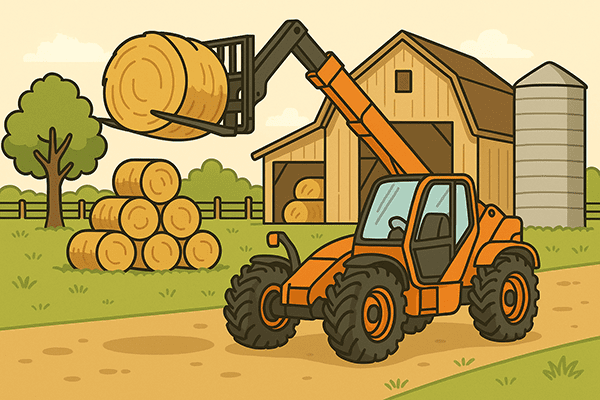
Farms, ranches, and agricultural operations also benefit greatly from rough terrain forklift rentals. Imagine a farm where you need to move heavy hay bales, bags of feed, fencing supplies, or farm equipment across muddy fields or gravel lanes. A standard forklift would sink or spin its wheels, but a rough terrain forklift handles it with ease.
Farmers often use telehandlers to stack hay in barns, load feed into high mixers, or lift materials to the upper level of a barn or silo. The four-wheel drive and big tires make it possible to drive over plowed fields or uneven ground between barns without issue.
By renting a rough terrain forklift during peak seasons (for example, harvest time or when building new structures), agricultural businesses get extra lifting capability exactly when needed. It’s a cost-effective way to boost productivity on the farm without having to invest in owning a specialized machine that might sit idle in the off-season.
Outdoor Events and Festivals
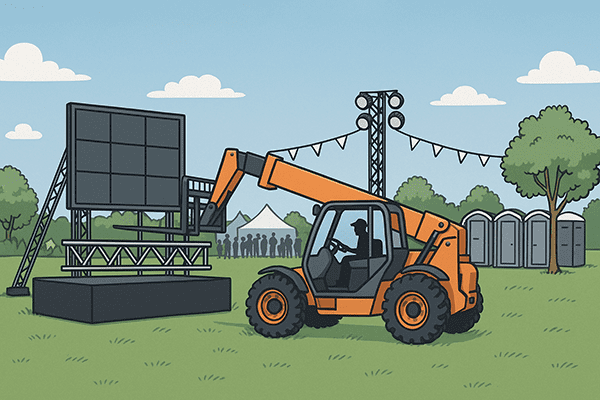
When organizing large outdoor events – such as music festivals, fairs, concerts, or sporting events – there’s a surprising need for heavy lifting and material handling. Stages, lighting towers, sound equipment, portable restrooms, and even concession stands all have to be transported and set up on location. Often these event sites are open fields or parks where the ground can be soft or uneven.
Rough terrain forklift rental comes to the rescue by providing the muscle to move and position heavy gear in these off-road conditions. Event crews use telehandlers or all-terrain forklifts to unload equipment from trucks and carry it across lawns or fields to the setup area. For instance, a telehandler can hoist truss sections for a stage or position large LED video walls that are too heavy to lift manually.
The ability to rent these forklifts only for the duration of the event setup and teardown is a huge advantage – it keeps costs down and logistics simple. Once the festival is over, the rental company picks up the equipment, and you’re not stuck storing a big forklift.
Landscaping and Land Management
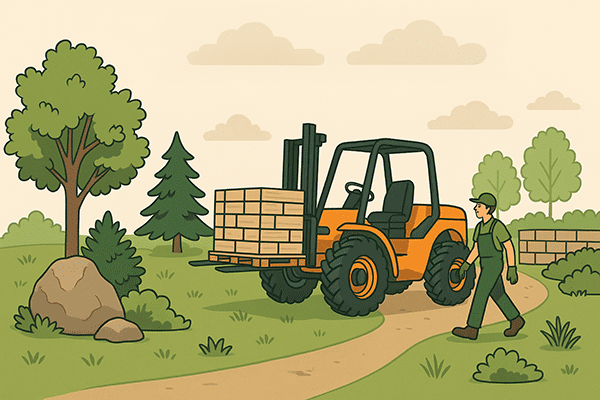
Landscaping projects often involve moving heavy materials in areas with no paved paths. Whether you’re installing large trees, moving boulders, or laying pallets of sod across a future lawn, a rough terrain forklift can be the ideal tool.
Landscaping crews rent rough terrain forklifts to navigate through dirt, grass, or wooded areas that a normal forklift couldn’t traverse. For example, if you’re redesigning a park, you might need to haul sections of stone retaining wall or heavy sculptures into place off the road. A 4×4 off-road forklift can carry those loads over the ground without damaging the site or getting stuck. In large-scale residential landscaping, these forklifts help move materials from the street to the backyard, such as transporting pavers, timbers, or bags of concrete to where a new patio or retaining wall is being built.
Rental Efficiency Tips
To get the most out of your rough terrain forklift rental – and to ensure safety on the job – keep these efficiency tips in mind. A little preparation and caution go a long way in making your rental experience successful:
Operator Training
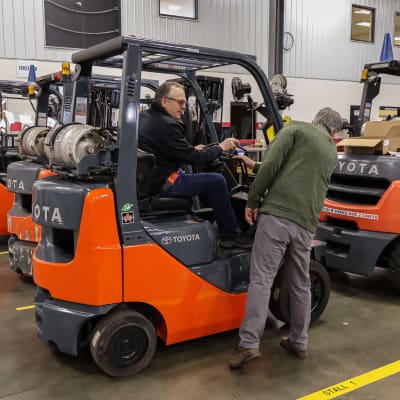
Always ensure that anyone operating the forklift is properly trained and certified. Forklifts may seem straightforward, but rough terrain models are heavy, powerful machines with unique stability characteristics.
Untrained operators are a risk to themselves and everyone on site. In fact, forklifts are involved in dozens of workplace fatalities each year and tens of thousands of injuries. In 2023 alone, 67 work-related deaths were caused by forklifts. Many of these incidents could be prevented with proper training and safety practices.
OSHA regulations require that all forklift operators be trained and certified to operate, so it’s not just a suggestion – it’s the law. Before using your rental, verify that your driver has up-to-date forklift certification (specific to the type of forklift, including telehandlers if you’re using one). If not, consider arranging training or hiring a certified operator. Trained operators will use the machine correctly, avoid tipping or misuse, and ultimately handle tasks faster and more safely. It’s an investment in both safety and efficiency.
Basic Maintenance and Daily Checks
While the heavy maintenance is handled by the rental company, you are responsible for daily care and operation. Treat the rented forklift as if it were your own in terms of care. Each day, do a quick pre-operation inspection: check tire condition (look for damage or low pressure), test the brakes and steering, make sure lights and alarms work, and ensure the forks or attachment are secure.
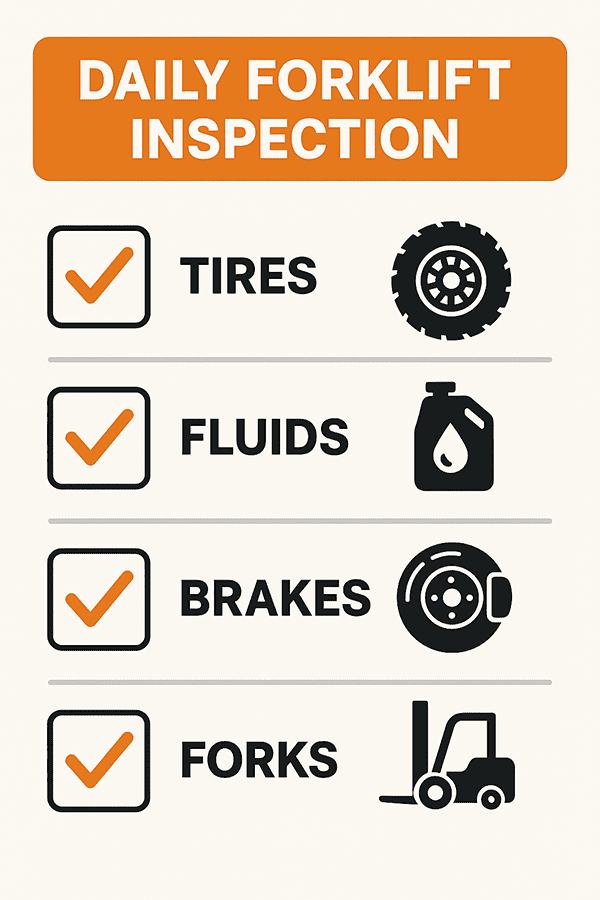
Also verify fluid levels if applicable (fuel, hydraulic fluid, engine oil – depending on the machine). These simple checks can prevent small issues from turning into major problems. If you notice anything off – for example, a leak or a warning light – report it to the rental company promptly. They may guide you on a fix or send a technician if needed.
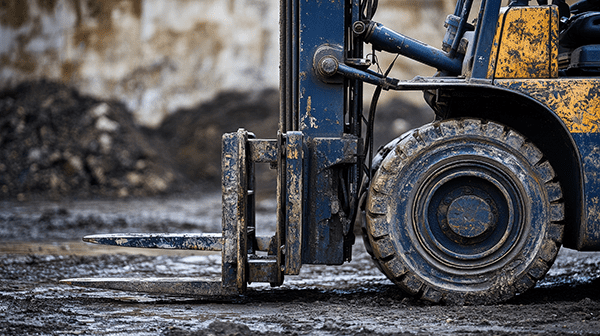
Keep the machine as clean as practical; for instance, if you’re working in muddy conditions, try to hose off excessive mud at the end of the day. Clean, well-maintained equipment performs better and is less likely to have faults.
Safety Best Practices
Safety should always be a top priority when using rough terrain forklifts. Follow all standard forklift safety protocols just as you would on a normal forklift – the stakes are even higher on rough ground. Always wear your seat belt in the operator’s seat; a large portion of serious forklift injuries happen because operators are thrown or jump out during a tip-over.
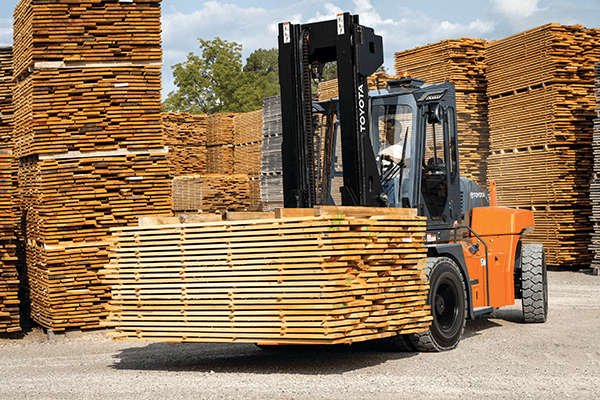
Keep the load low while moving, especially on slopes, to maintain a low center of gravity. Never exceed the forklift’s rated load capacity – overloading is a recipe for tipping. If your telehandler or forklift has stabilizers (outriggers), deploy them whenever you’re lifting heavy loads or extending the boom to full reach.
Make sure the ground is as stable as possible: avoid operating too close to trenches or on overly soft soil that might collapse under the weight. It’s also crucial to maintain clear communication on the job site. Use a spotter if necessary when maneuvering in tight areas or when placing loads at height – they can guide the operator with hand signals or a radio to prevent accidents.
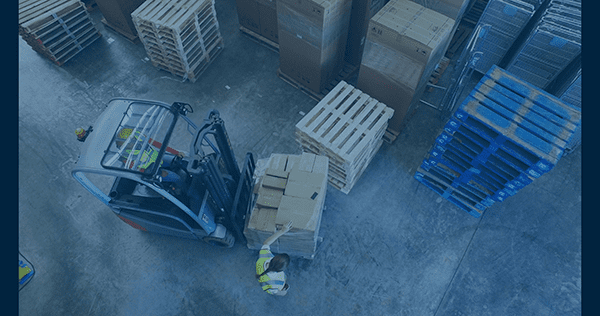
Observe OSHA guidelines and any site-specific safety rules without exception. By staying safety-conscious – wearing proper gear, driving at safe speeds, and never taking unnecessary risks – you protect both people and equipment.
Conclusion
Rough terrain forklift rental offers a practical answer for projects facing challenging ground conditions. Instead of struggling with inadequate equipment or manual labor, you can rent a machine purpose-built for the job. We’ve discussed the main types of rough-terrain forklifts (from telehandlers to straight-mast units) and how to choose the right one, key considerations like cost and specs, and the many benefits of renting versus buying.
The bottom line is that renting gives you the right tool at the right time – with financial flexibility and expert support to back it up. Whether you’re building a house, running a farm, hosting an event, or landscaping a property, having a rough terrain forklift on site can be a game-changer in efficiency and safety. Just remember the final tips: always use trained operators, take care of the equipment, and put safety first. With proper planning and execution, renting a rough terrain forklift becomes a seamless solution to some of the toughest material-handling problems out there. Get the equipment you need, conquer that uneven ground, and carry on with confidence in your project’s success.